
Prevention By Design:Design & Procure to Prevent
What happens when 18 senior leaders put the industry's biggest challenges on the table? Our first Executive Roundtable uncovered three critical fault lines shaping the future of mission critical infrastructure.
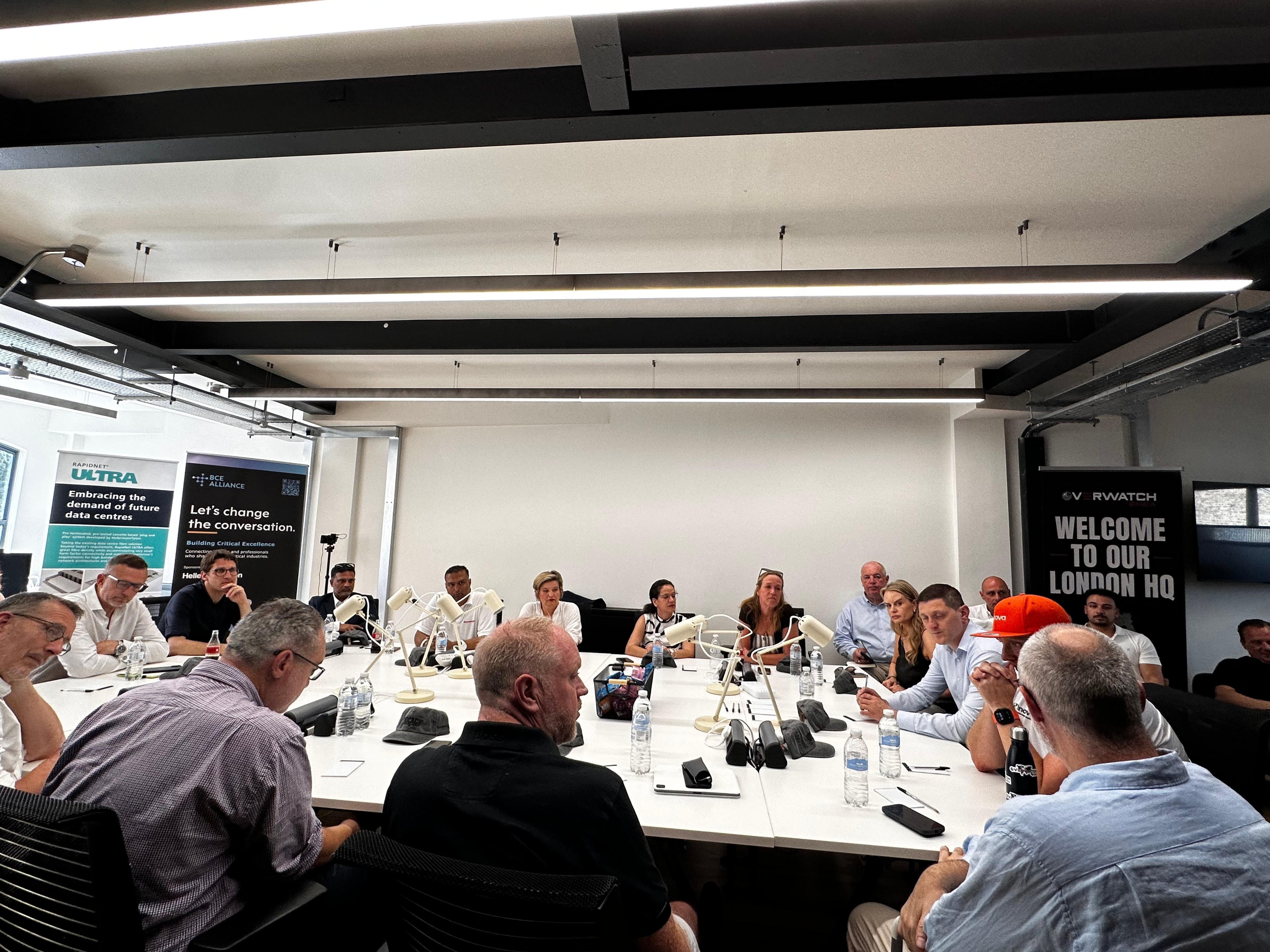
We don't believe sustainable digital infrastructure is created by better products alone. We believe it's created through better collaboration. That's the principle BCE Alliance tested when we convened 18 senior leaders from across the mission-critical ecosystem in the UK, EU and US for our first Executive Roundtable.
The room was built deliberately. Architecture, engineering, project and cost management, OEM and technology provision, digital construction, cooling and water, operations, procurement, sustainability, and investment were all represented. Not so we could hear where each discipline performs well individually, but so we could see where value, information and accountability get lost between them. The question we asked was simple to state and hard to answer: how does the sector design, procure, deliver and operate digital infrastructure in a way that prevents avoidable waste, rework, downtime and risk?
"The biggest risk in mission-critical infrastructure isn't technical failure. It's the silence before it."
The Problem Isn't a Product Problem
The strongest conclusion from the room was that the sector's sustainability challenge cannot be solved through product efficiency alone. Much of the risk we discussed wasn't created inside any single organisation. It was created at the interfaces between them, in changing requirements, fragmented handovers, late supply-chain engagement, inconsistent standards, weak lifecycle feedback, and insufficient planning for maintainability, adaptation and end-of-life.
Three findings kept surfacing, in different words, from every discipline in the room.
Three Fault Lines
Collaboration gaps are creating avoidable risk. The traditional linear model; design, then specification, then procurement, then construction, then operations, is increasingly out of step with how fast requirements move in mission-critical infrastructure today. Downstream teams are still expected to procure, build and maintain against decisions made earlier, even as those decisions keep changing upstream. The result is redesign, delayed procurement, inconsistent campuses, and cost and operational risk that nobody planned for. Sustainability has to be defined across the whole lifecycle. PUE remains a useful number, but the room was clear that it isn't a complete sustainability story on its own. The discussion kept widening the lens to water, resilience, maintainability, embodied impact, procurement integrity, adaptability, reuse and whole-life performance. A facility that looks efficient on paper but creates repeated redesign, premature replacement or avoidable failure can't honestly be called sustainable.
Failure prevention has to begin at the design stage, not the operations stage. Operations teams are frequently handed decisions they had no part in shaping. Liquid cooling was the example that came up most: strategically necessary, but introducing real new questions around maintenance, fluid management, testing, filtration, leak risk and second-life planning – all of which need to be considered before handover, not after something goes wrong.
The Tensions Underneath
The room spent real time on the tension between rapid technology change and 10–15 year infrastructure lifecycles, on where standardisation genuinely helps versus where it oversimplifies a whole-system problem, and on how much value, as well as how much waste sits inside the "why" behind a specification, which too often gets lost as a requirement passes from client to consultant to contractor to operator. There was also a shared recognition that water, power, heat reuse and community confidence are no longer side issues. They're part of how the sector earns its social licence to keep building at the pace it needs to.
So What's Next?
These aren't new problems. But they are urgent ones. The pace of infrastructure build-out — driven by AI, data demand, and the energy transition — means the industry cannot afford to carry these fault lines forward.
BCE Alliance exists to address exactly this. Not through more conferences or content — but through community, practice, and the kind of honest conversation that happened in that room. If you're a leader in critical infrastructure and this resonates, we'd like to hear from you.
Share this article
Join the conversation.
BCE Alliance brings together leaders across critical infrastructure to share knowledge, build confidence, and shape the future of the industry.